
5 Epic Self-Publishing Launches
Winning Strategies from Sovereign Authors

More books are being published than ever before. That’s great if you are a reader, but if you’re an author looking to shift copies, times are hard. Wordrated reported that 90% of self-published books sell fewer than 100 copies.
Yet, self-publishing is the route that most sovereign authors take, as it offers the most control over the process. And with self-sovereignty comes the responsibility of implementing an effective market strategy.
The main thing that matters to authors is that their book displays sound logic, tells an engaging story, or represents their idea in the best way possible. However good your book is, it will likely bomb without a carefully crafted marketing plan aimed at a precise audience.
Most writers prefer writing to marketing. However, as a self-published author, it’s up to you to learn about the necessary steps to secure more reviews, to harness your network of supporters, manage print-on-demand services, and ultimately, sell more copies. Authors must balance their time and monetary investment — dedicating every waking hour to posting about your book is just as unfeasible as hiring a full-time marketing team to shill your work.
Essentially, 21st-century authors in the freedom space need to invest time and energy into making some organic gains before paying for speculative advertising campaigns and promotion.
Self-Publishing Wins: How 5 Freedom Authors Successfully Marketed Their Books in 2025-6
View these five different approaches from authors who have published Bitcoin, privacy, and freedom fiction books in the last year. If you are getting ready to publish a book on Austrian economics, 21st-century health, sovereign business advice, off-grid living, spirituality, homeschooling, family values, privacy and security, freedom tech, or any adjacent topic, these strategies can help you build your own publishing OPSEC.
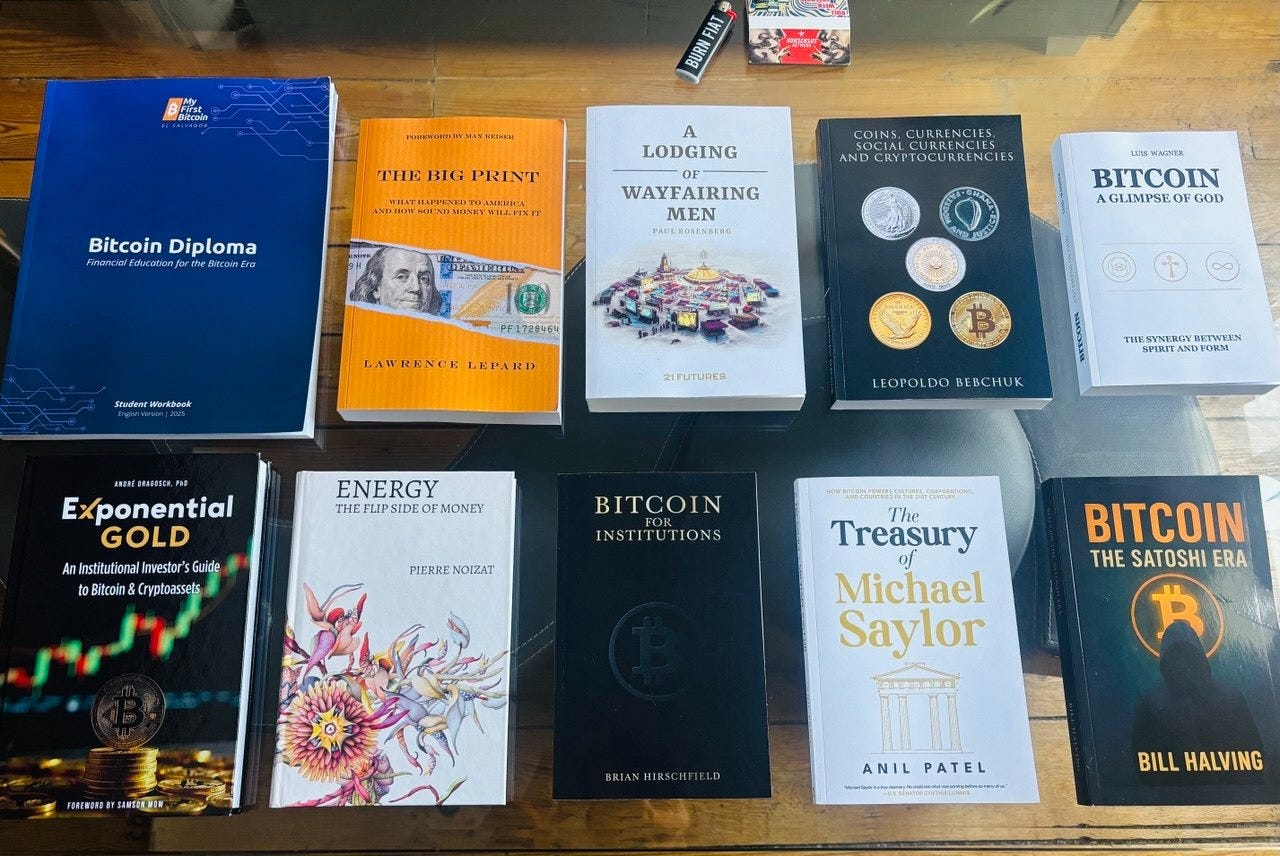
Bitcoin For Institutions by Brian Hirschfield

This book of sharp corporate insight has made a big impact in the business niche. No, it’s not a treasury company playbook; it’s a to-the-point road map for institutions of any kind, with a smattering of personal stories from the author (an ex-actuary).
This book is a great example of how an author without a big social media following achieved impressive results through using less-popular platforms and focusing on business relationships rather than sales alone.
Marketing Strategy:
Using a network of Bitcoin advocates on LinkedIn to reach Bitcoin-curious CFOs and founders.
Contracting Konsensus Network to handle book production and marketing elements, securing interviews, reviews, podcast appearances, and newsletter distribution. This allowed the author to focus on marketing and future projects.
Selling at meetups, including via a low-cost, Lightning eBook delivery mechanism.
Continuing to talk about the book months after launch by guesting on podcasts, sharing milestones and lessons from the book, and attending conferences.
Setting up an automated feed to share insights from the book on Nostr.
Results: This book hit the zeitgeist of business Bitcoin in 2025. It resulted in the author being invited to speak at several conferences and meet other leaders of Bitcoin ETFs, small business owners, and ex-trad-fi experts. The book is currently being translated at the request of a Bitcoin exchange CEO and business leader in Finland. Hirschfield has also set up Actuarial Bitcoin Advisors and Magic Internet Math, with the book acting as a proof of concept.
The Stolguard Incident by Lyn Alden

After the runaway success of Broken Money (100,000+ copies sold and now available in 10+ languages), it is no surprise that Lyn Alden has done it again. What is surprising is that the book is in a completely different genre from her normal work: speculative fiction. Alden has long viewed fiction as being every bit as important to read as nonfiction, stating that she has been ‘shaped by characters and stories [she’s] read over the decades.’
“Indie publishing is a viable path, and it gives the author more creative control from start to finish, but my primary advice would be to take the project just as seriously as any traditional publisher would take a book that they have a high conviction in.” Lyn Alden on publishing.
Here’s the strategy that Alden employed to ensure her fiction book gained momentum upon launch.
Marketing Strategy:
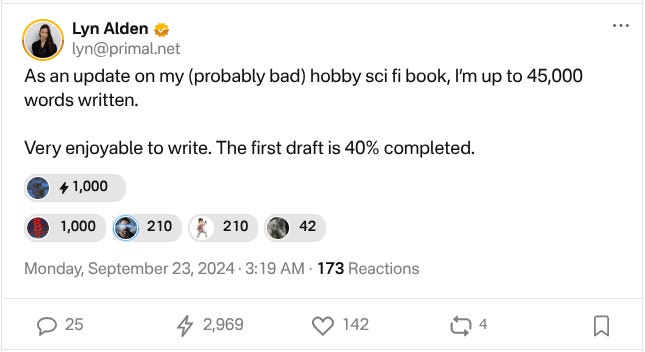
Posting vulnerable and honest takes about being new to fiction writing.
Writing in the open: sharing updates, wins, and starting conversations about sci-fi, film, and speculative stories.
Budgeting for a fiction release with the same conviction and focus on quality as her other work.
Focusing on Nostr as a cyberpunk-aligned audience.
Readying the release of the audio version after strong sales from Broken Money on Audible.
Sharing early reviews from well-known big accounts on X.
Results: While Lyn first described this ‘hobby project’, her conviction and investment in fiction has grown, leading to some noteworthy results. As a well-known voice in the space, she is bringing more cypherpunks to the realm of stories and fiction; in addition, she is likely to sell books to many outside the freedom and sovereignty space who follow her macro investing tips. As for sales numbers, it could be a little early to report, but The Stolguard Incident was ranked the top new Amazon release on its first weekend for both the cyberpunk and technothriller genres.
The Treasury of Michael Saylor by Anil Patel

Anil Patel is an educator, author, speaker, and investor who presented the compressed wisdom of another Bitcoin legend, using a proven formula (Eric Jorgenson’s Almanacs of Naval Ravikant and others). With a keen focus on community impact, Patel adopts different strategies from those seeking to maximize profits and personal exposure.
Marketing Strategy:
Giving away free digital copies. Anyone can access and share his work to help educate others on the importance of Bitcoin.
Tapping into a leadership network of high-profile speakers, authors, and businesspeople (securing reviews from Vijay Boyapati, Preston Pysh, Ricardo Salinas Pliego, HRH Prince Filip of Serbia, Natalie Brunell, Lawrence Lepard, and more)
Selling physical copies for sats on bitcoinbook.shop
Coordinated press release on English and Spanish versions.
Building hype by having Michael Saylor sign 50 free copies given away to key opinion leaders at BTC in DC.
Making heavy use of diagrams, frameworks, and infographics in the book to simplify concepts and increase sharability on socials.

Results:
“Marketing,” says Patel, “is only as good as the calibre of your book.” With such a monumental name on the front cover and a meticulous, pared-down presentation, this book was bound to go viral. In the first 24 hours alone, the book saw over 1,000 downloads. The Treasury of Michael Saylor achieved #1 bestseller status on Amazon (finance category). More than 6 months after release, Anil Patel shares reviews, insights, and impressions of the book, and with the Spanish version now available, other lucrative translations are in the pipeline.
Blood of the Bourgeoisie by Michael R. Sullivan

“I imagined a Bitcoin novel so thrilling,” says Sullivan, “I couldn’t put it down. I imagined a story so emotionally captivating that even someone with no interest in the orange coin would burn through it in a weekend. I imagined a book that explored how deeply intertwined the Bitcoin philosophy is with the American ethos. So I wrote it.”
This book was years in the writing, but it was also years in the marketing. Sullivan is another case of ‘writing in the open’, which helped him build a community and prime his audience ready for release. The book finally went live in late 2025.
Marketing Strategy:
Appearing on dozens of podcasts to discuss the book, fiction writing, and his other work and theories.
Focusing on his vision. Sullivan never compromised on the quality of his ‘great American Bitcoin novel’, ensuring audiences would love it.
Continuing to speak about his book project publicly, even when the publication date was uncertain.
Building a Bitcoin Writers community on X. Some of the 1,000+ members in the group proved crucial for beta reading, early support, and verified reviews.
Harnessing the popularity of key industry figures like Walker America (who narrated the audiobook) and Robert Breedlove (whose podcast Sullivan appeared on).
Continuing to share reviews and updates as more people in the community read the book. Fiction sales can be a slow burn.
Results:
Sullivan has expressed immense satisfaction at some of the positive reviews from friends, peers, and people he has never met. Several readers were completely new to Bitcoin and became curious enough to learn more after such a compelling story. In just three months, the book has received nearly 100 ratings and reviews (4.6/5) on Amazon and Goodreads. Sullivan now boasts a following of 15,000 on X and runs a community with more than 1,000 members.
The Praxeology of Privacy by Max Hillebrand

This book was never designed to ‘sell’ any copies. Cypherpunk praxeologist Max Hillebrand has run a variety of freedom-tech projects over the years and wrote this book to contribute to the corpus of academic work on privacy. The intended audience is Austrian economists, cypherpunk builders, and other writers who may wish to quote the source material.
Marketing Strategy:
Released in multiple formats, open source and censorship resistant.
Released in versions (v0.1, v0.2, etc.) to keep the source material relevant and useful
Used Praxeology of Privacy talking points consistently during speeches, podcast appearances, and in articles published on Nostr.
Involving the privacy community by including notes and additions in future versions.
Using the message and ethos from the book as the basis of content for Freedom Tech projects like White Noise.
Results: The desired results for open-source academic work like this are that the book be forked, written about, quoted, and discussed online. Hillebrand received praise from cypherpunks (Eric Voskuil) and Praxeologists (Stephen Kinsella) alike, and the book have been quoted and cited in several articles since its release. Hillebrand believes it find new academic readers on Mises.org in the near future. After a positive initial reception, Version 0.2 has now been released. Max Hillebrand continues to speak at key freedom conferences and has been a guest on several top libertarian podcasts. He has become one of the top voices to follow on Nostr and is building the wider freedom tech community with White Noise and other projects.
***
Self-Publishing Launches: What NOT to Do
Now you’ve got some ideas for possible approaches to market your book, here are some don’ts. Many of these can seem tempting as a first-time author, as they save time, effort, or money. Remember: the best launches are well planned and executed over a longer time.
Don’t compromise on the product.
It can be tempting to rely on AI, to forgo thorough editing, or neglect diagrams and graphics. The most important piece of a launch strategy is YOU. Authors must be 100% certain that the book is their best work.Don’t scrimp on the cover.
Again, many fall into the trap of using AI, cheap freelance designers from Fiverr, or asking someone in their network for a favor. People DO judge books by their covers — that’s what covers are for. A bold, unique, and clear book jacket entices potential customers to want what lies inside.Don’t neglect your elevator pitch.
As a self-published author who is responsible for marketing, you’ll have to talk about your book A LOT. This means crafting a punchy book description and back cover copy that gets interested buyers to the till. Create 1-sentence, 3-sentence, and 9-sentence versions of your pitch to readers, and repeat the most relevant one in your posts and appearances.Don’t hit ‘publish’ and pray.
Many first-time authors think the book launch is done once they hit publish, but the work is just beginning. If your book is on Amazon, it will be lost in a sea of competitors, and if you don’t plan your distribution, it will be hard to direct readers to your book. Effective marketing relies on planning, precision, and persistence. Many successful authors spend 50% of their time (at least) marketing their work.Don’t go it alone.
Get as much help from your immediate network as you can, but don’t neglect paid services. Make sure to set aside part of your publishing budget for marketing. Use it to reach reader networks, subscribe to relevant platforms, invest in high-quality visuals, and increase your book’s visibility in a crowded market.
Don’t trust; verify
Many ‘book marketing experts’ will promise you bestseller status if you pay their $4,000 fee. Don’t fall into this trap. Verify your marketing ROI as you go, and be mindful not to spend big on unproven methods. Rather than dedicating hundreds or thousands of dollars to KDP or Facebook ads without understanding the risks, it’s better to build momentum slowly, garner reviews, and test the efficacy of PPC advertising.
For book launches and book marketing, there is no one killer technique. Several approaches can work well, but they all take time, effort, and budget.
For freedom books in 2026, you don’t need a massive audience or a huge marketing budget to succeed. All you need is a well-executed plan that best uses the effect of the network you have already built.
Gain Access to Our Network at no Extra Cost to Amplify your Book’s Reach
At Konsensus, we launched a decentralized full stack publishing platform to help authors save time and publish their ideas. We work with a pool of talented editors, marketers, and designers who deliver high-quality work at reasonable rates.
Konsensus is offering its Layer 1 marketing package (worth $650) to the first 5 publishing clients. This includes:
A personalized book launch plan covering 3 months pre-launch to 3 months post-launch
A dedicated marketing rep to answer questions and help via DM
3 native posts on X and Nostr and monthly reposts on your offers (20k followers)
LinkedIn content from team accounts and reposts on your content (30k followers)
3 professional book mockups for marketing posts
3 ARC reviews secured from our readers’ groups on Telegram and Club Orange.
One newsletter feature (2k subscribers)
Outreach to relevant media (sites and podcasts)
(More comprehensive marketing packages are available for an upgraded fee).
If you have a freedom-themed manuscript and you are gearing up to publish, we can get your work from manuscript to storefront in around 3 months. Having our network to handle the heavy lifting means you can focus on spreading your book as far as possible, and with our free marketing booster, we can help with that, too.
To book a call to share more about your project, visit our site.
Glossary of Publishing Terms
Manuscript: Your finished book draft, before it goes through editing, typesetting, and production.
Publishing OPSEC (operational security): a systematic process used to identify, control, and protect your written work and analyze risks and threats against it.
Decentralized publishing: An agile approach to publishing facilitated by connecting expert freelancers to authors. A project manager ensures deliverables and deadlines are met, while the author has final say and is free to contribute as much as they want. Similarly to centralized ‘hybrid’ or ‘partnership’ publishing, authors pay book production costs and maintain copyright and 100% of royalties.
Back Cover Copy: Also known as the Blurb or Book Description. A brief compelling summary on the back of your print book (or online description for ebooks) designed to hook readers and make them click “buy.”
Sovereign Author: A self-published or ‘indie’ author who writes in the freedom niche — Austrian economics, self-sovereignty, privacy tech, digital security, Bitcoin, etc.
Indie publishing: When authors publish their work directly—through platforms like Amazon KDP or IngramSpark—without signing with a traditional publishing house, retaining full creative control and a larger share of royalties.
ARC (Advanced Reader Copy): Early versions of the completed book sent to reviewers in digital form before publication. This gives reviewers time to read the book so they can leave reviews immediately after publication, helping buyers to decide on whether to purchase.
PPC (Pay-Per-Click) advertising: Advertising on Facebook and Amazon allows self-published authors to pay only when readers click their ads. Facebook targets audiences by interests and demographics while Amazon targets readers actively searching for books with specific keywords.
ROI (Return on Investment): A measure of the profitability for marketing efforts. Money spent vs money received through book sales (minus overheads).
Print-on-Demand (POD): Individual books are printed after an order is placed. This means authors do not need to guess sales numbers by printing and storing thousands of copies.